Baklava/Balaclava
They're Different Things, Apparently

During my daily doom scroll on social media, I learned of “balaclava.” When I say I learned of it, I mean I saw a bunch of white girls wearing scarves on their head and scoffed. Then mentally bookmarked this trend to research for later.
And forgot all about it.
Weeks later I ended up misremembering and looking up “babushka scarf” which contextually made sense (to me). I know babushka means grandmother, it’s the only Russian word I know after diligently trying to teach myself Russian at age 10 from a library book. And grandmothers and older women are always telling you to bundle up. There were no results so I gave up.
But the right terminology found me when I went to my art opening in Brooklyn (the group textile show is up at The Invisible Dog until February 2) last week and met a knitter that was making herself a balaclava. Angels sang.

I was wracking my brain why this trend stood out to me so much. I’ve only seen white girls call it, balaclava, and it seems like cultural appropriation. Bundling up is not a culturally specific practice but making it aesthetically content-ready is odd to me.
As America becomes Bush Era 2.0, it sounds alarms to conservatism. Balaclavas cover more of your body instead of wearing a separate hat and scarf. It echos a hijab in that way.
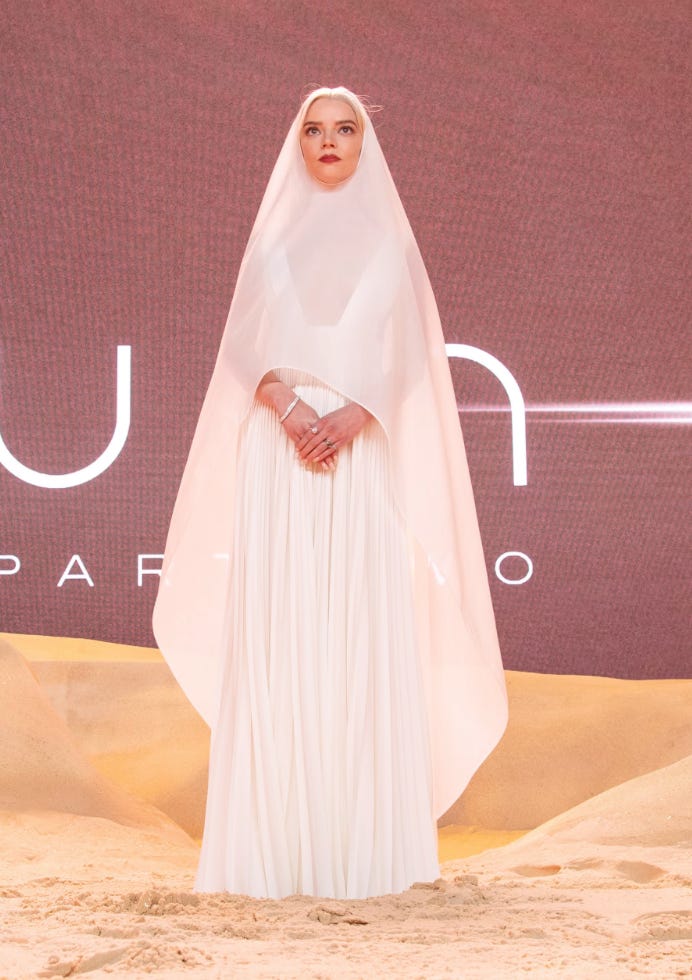
It particularly reminds me of France’s hijab ban that got press a few years ago (it could have been longer than that time isn’t real). Then within the past few years hijab-adjacent fashion was trendy. Look at the female stars of Dune 2.
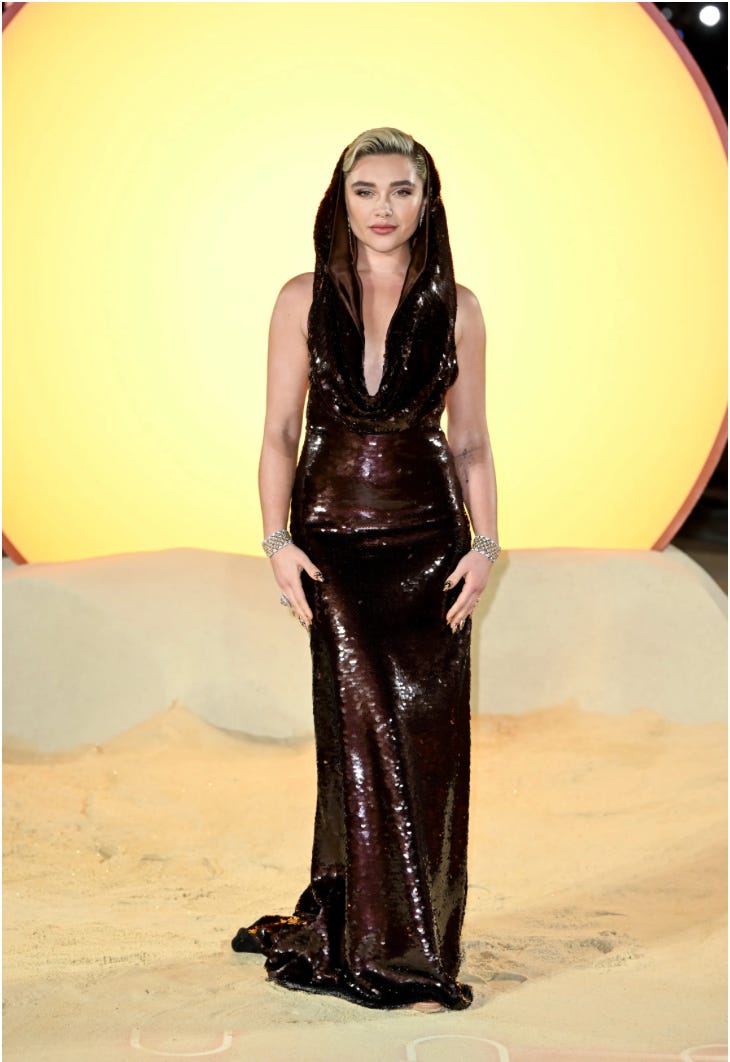
Balaclavas seem to be the newest appropriation in the hands of white women. What does it mean to wear this headscarf fashionably while our sisters in Palestine wail over their families’ corpses? Or as our sisters in Iran defy oppression? Or as girls in Iraq are forced into child marriages?
If you’re not wearing it as a protest or symbol of solidarity, what is the point?
Head scarves are politicized whether we just see them as stylistic accessories or not. Think of Black American enslaved women who were forced to cover their hair because slave masters’ wives found slaves’ hair seductive and a temptation to their husband’s pillaging libido. Not all head scarves are non consensual wear but its worth thinking about women’s rights on an international scale before we put on our outfits in the morning (and while voting but that’s a different post).
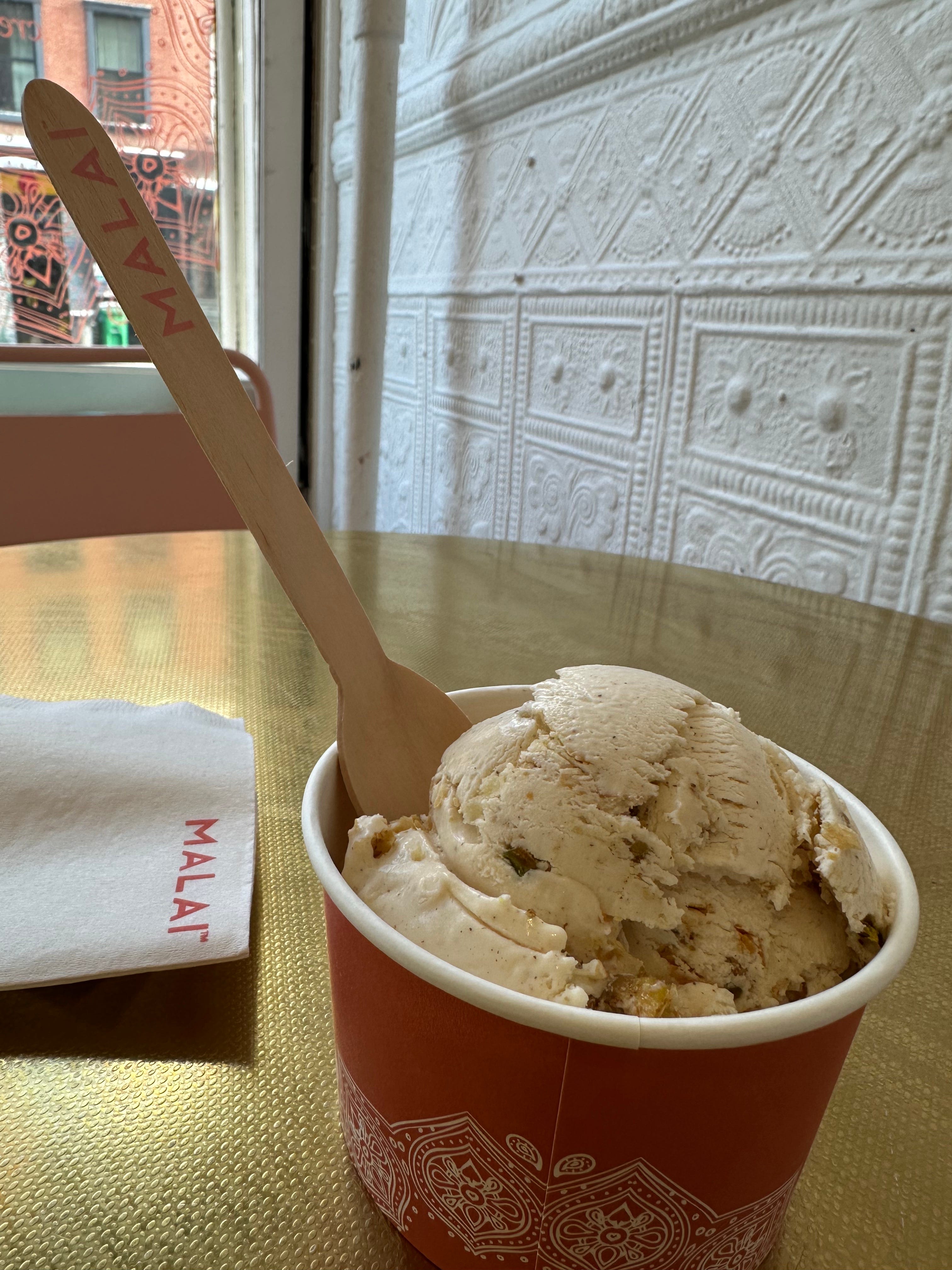
Needless to say, what actually got me thinking about all this is eating baklava ice cream at Malai on one of the coldest days in January. This ice cream was fascinating. Baklava is a dessert made up of flaky delicate layers with syrup, honey, pistachios, and walnuts. The flakiness is the quintessential part of the baklava experience. I thought the heaviness of the ice cream would make it soggy like cereal.
But somehow the ice cream created space around the individual flakes and barely touched it. So as it’s devoured flakes float off the spoon and on top of the ice cream like snow.
As for the nuttiness, it wasn't too nutty. It was just like eating baklava but it took a little longer so I could linger in the experience.
What other desserts should be ice cream flavors?